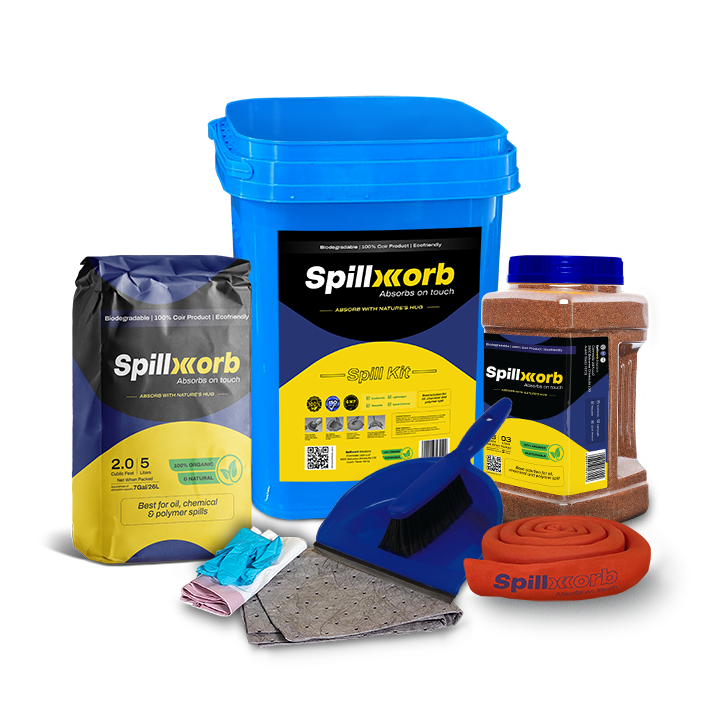

Chemical absorbents are really important for cleaning up chemical spills in places like laboratories and factories. They help to soak up, calm down and stop liquids like acids and strong bases from causing harm. Chemical absorbents are very good at protecting people, equipment and the environment when something goes wrong. Using absorbents is a must to keep everyone safe and follow the rules for safety. Chemical absorbents make sure that we can handle chemical spills in a way.
Chemical spill absorbents are really good at cleaning up spills. They help make the workplace a safer place. This is because they reduce the risks that come with a spill. They also stop things from getting contaminated. Chemical spill absorbents are very useful when something spills.
Chemical absorbents are really useful when we have to clean up spills right away and when we do regular maintenance to take care of small leaks or drips. They are good, for handling:
These absorbents work well when you use them with Spill Absorbents. The Spill Absorbents help to keep the spill from getting out of control and making a mess. You can put absorbent boom socks around the spill to stop the liquid from spreading. The granular absorbent bags are good at soaking up acids and bases. They do it quickly and efficiently. This helps to neutralise the acids and bases which’s very important. The absorbents and Spill Absorbents are a team they help to clean up the spill and make the area safe again.
Using chemical absorbents correctly helps reduce the risk of accidents and keeps workplaces safe.
The chemical spill kit is very important. It has lots of things to help clean up the chemical spill.
You will find the chemical spill kit, in places where people work with chemical spill.
All the components of the system work together to soak up, make safe and get rid of liquids. This stops any damage from happening and makes sure that spills are cleaned up fast without making the hazards spread. The components do this so that the hazardous liquids are removed safely.
Chemical absorbents are made from synthetic fibres that have been treated with chemicals or from tiny mineral pieces. These are picked because they are tough and can handle chemicals. The pads and mats are really strong so they can soak up liquids without falling. The tiny mineral pieces keep their shape when you use them with absorbents. Chemical absorbents, like these are very useful.
The granular shaker jar granules help to cover spills well so the whole area gets covered and everything gets absorbed. The granular absorbent bags keep the liquids inside so they do not leak out. That makes it safe to throw them away. Granular shaker jar granules and granular absorbent bags are great for laboratories. They are also good for industrial facilities and educational institutions, like schools.
Chemical absorbents are really good, at soaking up all sorts of things like:
These things are not good for chemicals that react a lot or for chemicals we do not know much about unless we have checked them first. We have bags that have a kind of powder in them. These bags can make acids and bases less dangerous. They turn them into something that will not hurt us as much and they keep the liquids inside the bag so they do not spill out.
The amount of liquid that something can absorb depends on the size of the kit and the type of material that is used in the kit. The kit size and the absorbent type are the two things that affect how much liquid the kit can absorb.
Several litres of chemical absorption per kit
High retention per pad or mat
Granular absorbents are really good at working on surfaces that’re not even. These granular absorbents can handle the parts of a surface. When you have a surface that’s not flat, granular absorbents are the best choice. They can work well on all the areas of the surface. Granular absorbents are very useful for these types of surfaces.
When the chemicals are absorbed they stay inside. The materials do not fall apart. Change into something else so it is safe to pick them up and throw them away. This makes the process of collecting and disposing of the chemicals very safe and easy to manage. The chemicals remain contained. The materials do not break down.
Chemical absorbents are made with high quality controls in place. The people who make absorbents have to follow very strict rules to make sure they are good enough. This is how chemical absorbents are manufactured under quality standards:
These certifications are really important because they make sure that the equipment is reliable and works consistently. They also make sure that everything is safe to use in laboratories and industrial settings. These certifications are about following safety rules so people can work safely.
Chemical absorbents are suitable for:
These things work well for acids and bases and solvents. They are not good for spills that’re only oil or for chemicals that react really strongly unless it says they are okay, for that.
When used correctly, chemical absorbents provide a safe, controlled, and efficient way to manage hazardous spills while maintaining compliance with safety standards.